
It Felt Like Coming Home: How Make-A-Day's Dignity Market Became a Pop-Up Staple
“Literally, when we were walking up to the event, people were saying, ‘Hey, Mike and Lisa.’ It was like coming home.”
Mike Rausch and Lisa Himes have been serving in the Short North for nearly two decades. They began volunteering at a food pantry on 5th Avenue in 2008, during the financial crisis. When that pantry closed, they did not step away from the work. They followed the relationships and joined Make-A-Day’s Pop Up Care Villages, which began in the Short North and continued to serve the same community over the last 7 years.
When they learned that the next Pop Up would be held at Standard Live! in the Short North, Mike told Lisa, “It’s an event for homeless folks. It’s our people.” Some of the guests they had not seen in one or two years since the pantry closed were there. “I was almost in tears,” Lisa said. “Seeing some of the people that I just loved.”
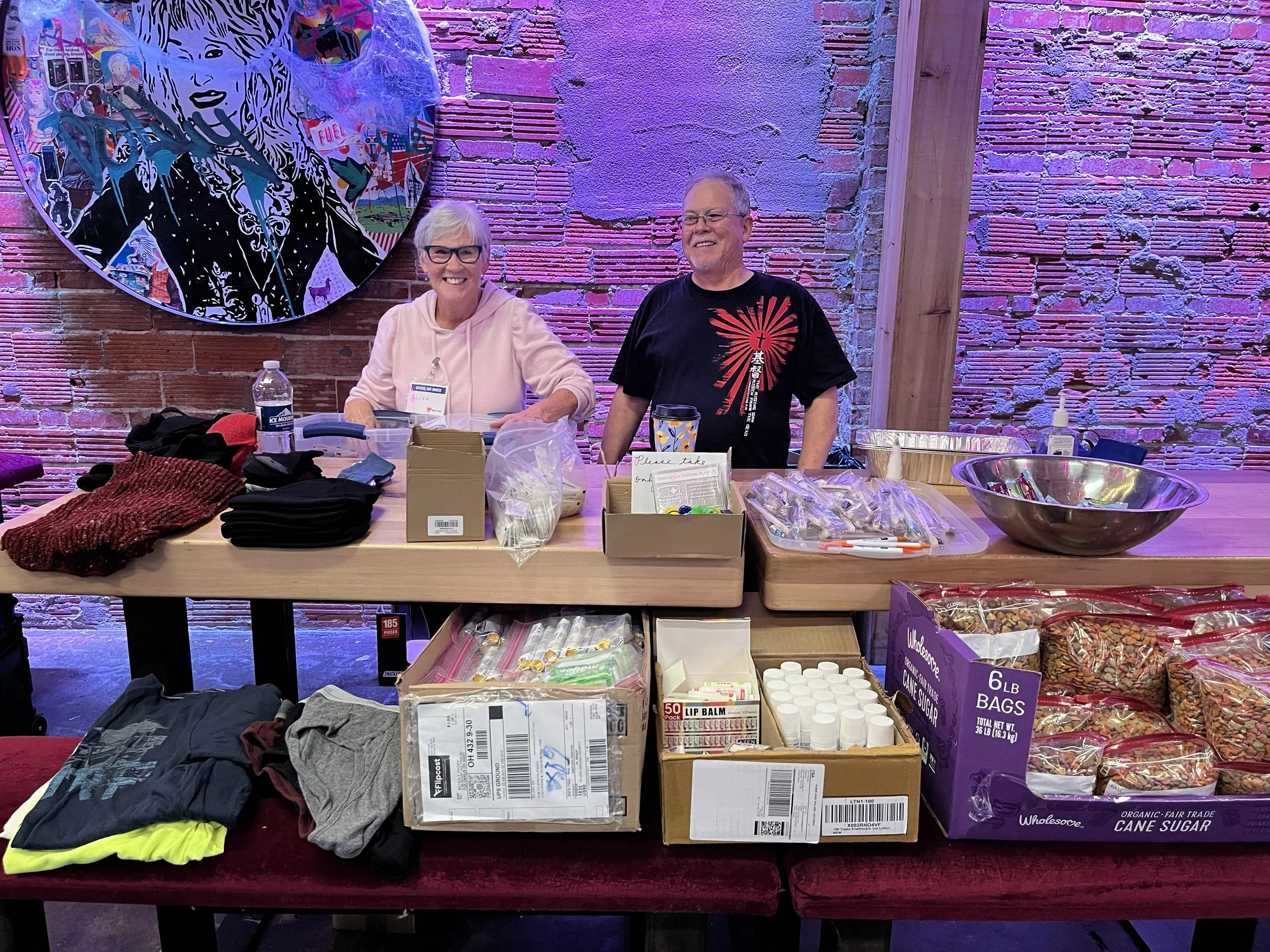
Mike and Lisa manning the Dignity Market at Standard Live!
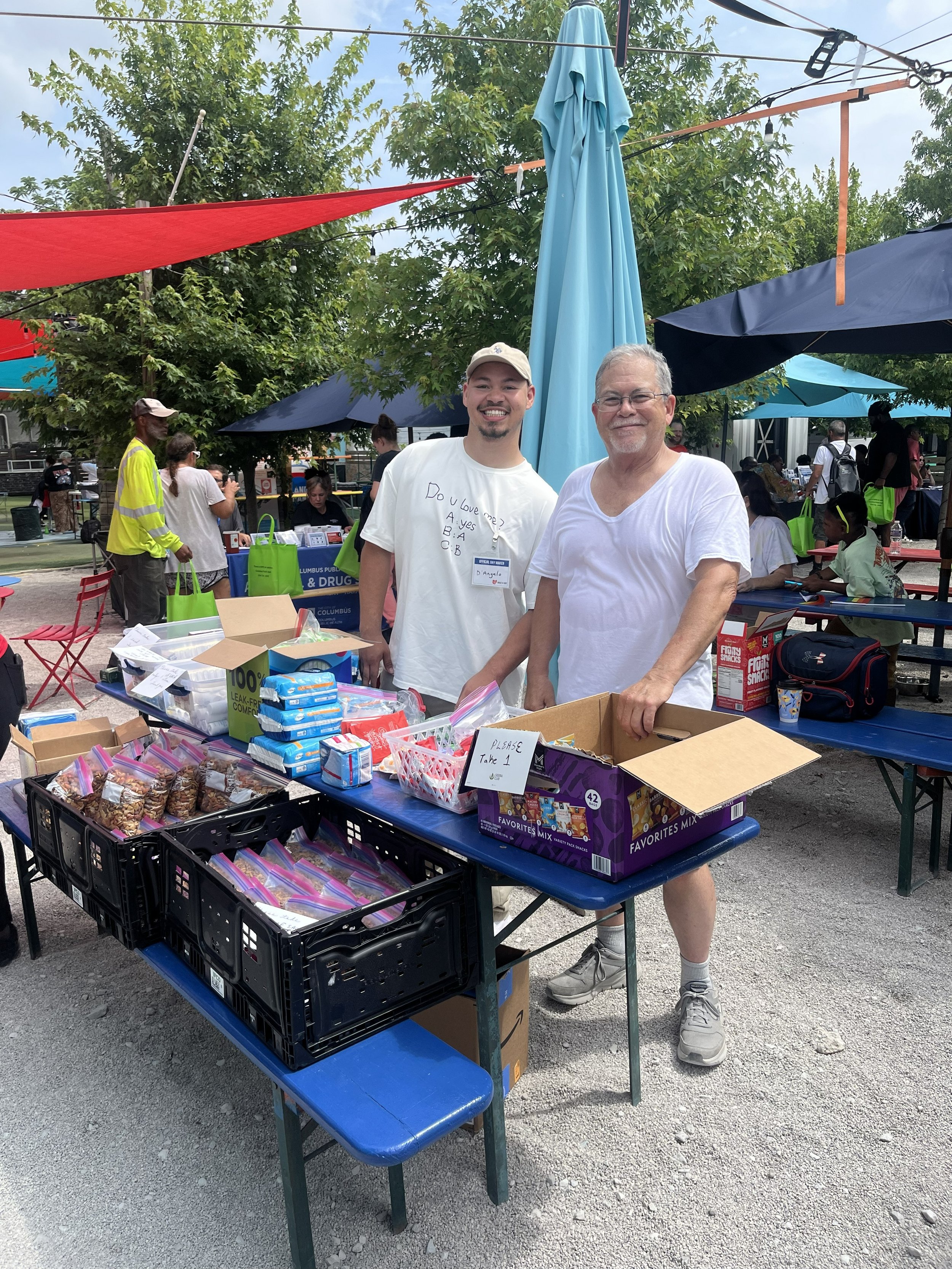
Mike and his grandson D’Angelo distributing donations at a Pop-Up Care Village.
Mike and Lisa are the founders of Make-A-Day’s Dignity Market, a volunteer-led space within each Pop Up where guests can choose clothing, hygiene items, snacks, and practical supplies based on their own needs. The market operates on a simple idea: People deserve choice.
The Dignity Market did not begin with a strategic plan. It began with listening.
At the pantry, volunteers were expected to stay in the back and pack bags with canned goods and cereal. Mike and Lisa did that on their first day. But it did not sit right with them. They wanted to be face-to-face with the people coming through the line. They wanted to know names, hear stories, and respond to requests. So they moved out front. That is where they stayed.
They built friendships. They paid attention. They heard what people were actually asking for.
Razors. Wipes. Specific socks. One man explained he lived along the railroad tracks and used wipes to bathe. After that, wipes became a staple. Guests asked for darker socks because they do not show dirt as quickly. Laundry pods were added after seeing another outreach partner distribute them. Eventually, Mike and Lisa began assembling full laundry kits.
The Dignity Market grew from those conversations. It was shaped by what guests said they needed, not by what volunteers assumed.
What began as a few tables of supplies now fills entire hallways at some Pop Ups. That growth has required a team. Mike and Lisa rally friends, family, church members, and even their aquafit class. Their grandson uses PTO to volunteer at events. Some first-time helpers have become regular volunteers.
“We sing Make-A-Day praises all over the place,” Lisa said.
For Mike and Lisa, the work has always been personal. Lisa remembers a couple who came into the pantry during the financial crisis. The husband had worked construction. The wife worked at Taco Bell. They had two children.
“He said, ‘I’ve never asked anybody for anything ever, but we don’t have food.’” Mike remembers thinking, this is why I am here.
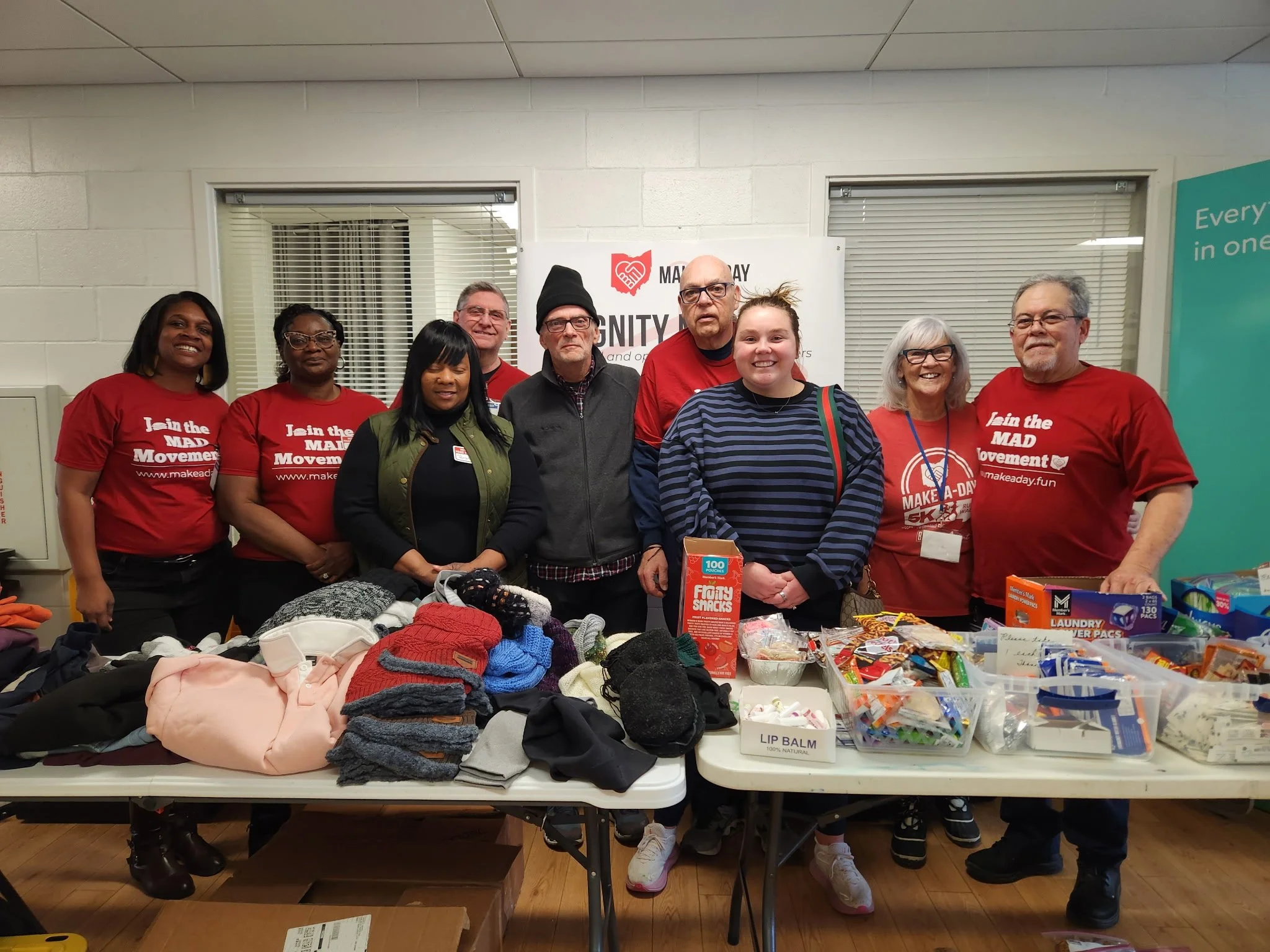
The team of Dignity Market volunteers at this past Move the Box Pop-Up Care Village.
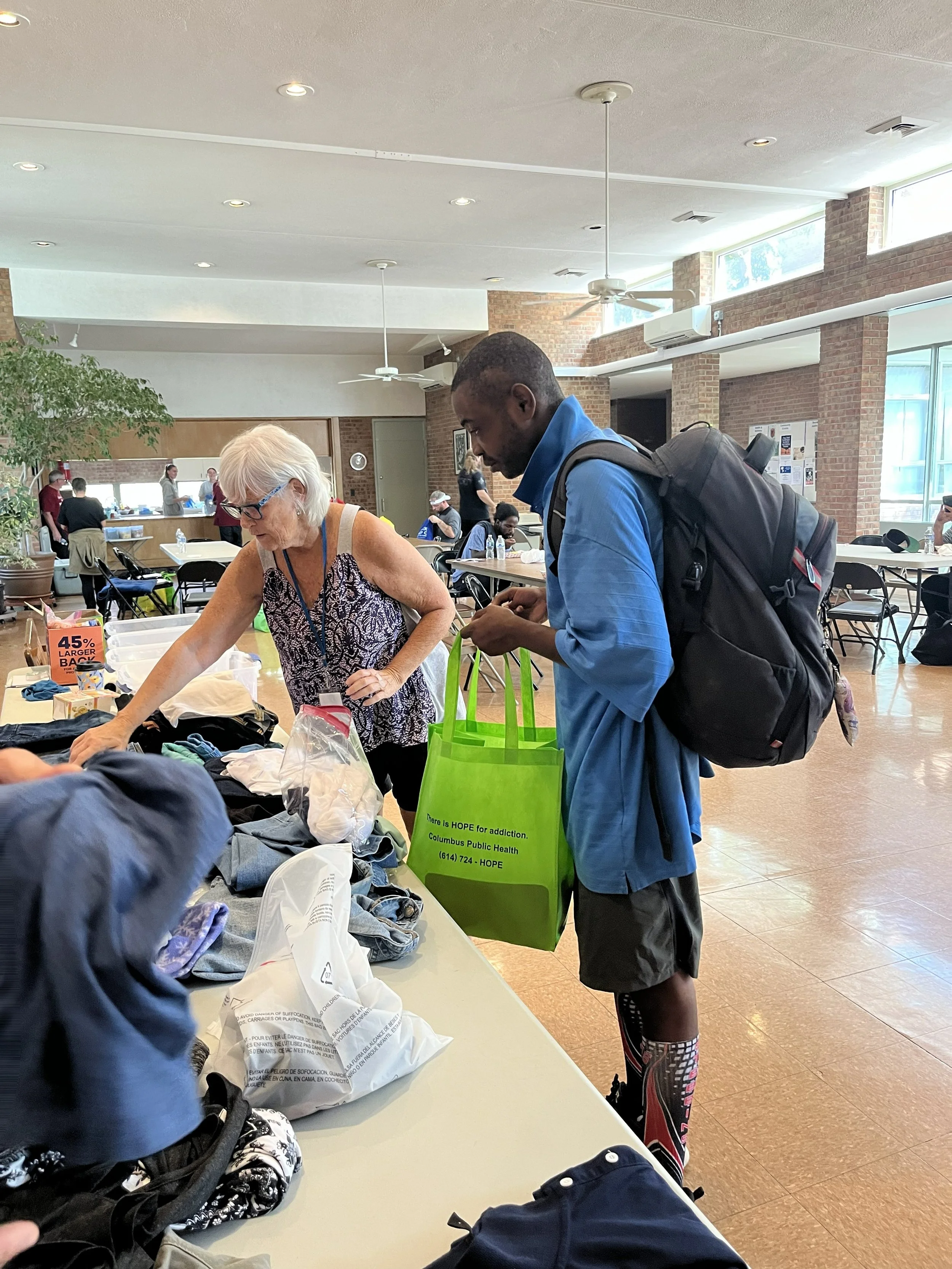
Lisa helping a guest sort through items at a Pop-Up.
Years later, she saw a familiar guest at a Pop Up. He had been coming for years. That day, a Make-A-Day staff member was taking him to detox. “I remember crying with him and telling him how proud I was that he took that step,” she said.
“I just love seeing people transition into housing and getting sober,” Lisa shared. “That’s not really our part in it. But if we are helping them get through another day, another week, another month, I think people need to see people like us caring. I think that’s important.”
At every Pop Up Care Village, guests know they can count on the Dignity Market. A place to grab snacks for the road. Hygiene supplies. Laundry kits. Socks. And someone who will say hello and remember their name.
The Dignity Market is not just about supplies. It is about presence. It is about relationships that last longer than a single event. It reflects what happens when care is designed alongside the people receiving it.