
Move the Box: Expanding Access to Justice on Columbus’ South Side
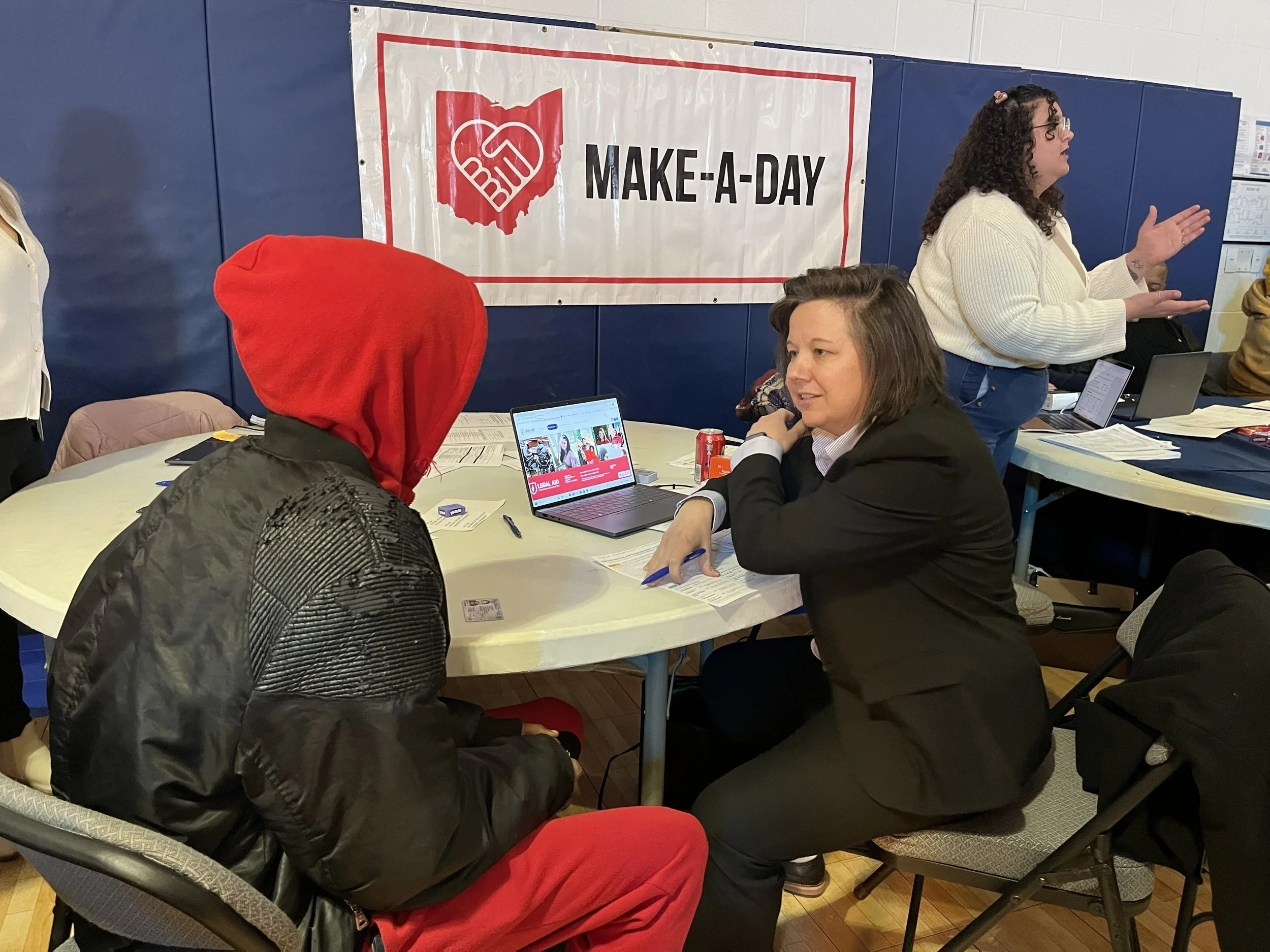
In Franklin County, access to expungement is shaped as much by circumstance as by law.
Ohio allows many records to be sealed or expunged. But the process assumes stability: a permanent address, reliable transportation, access to legal guidance, and the ability to pay filing fees. For many of the neighbors Make-A-Day serves, people navigating homelessness, poverty, or recovery, those conditions do not exist.
These barriers do not fall evenly. Because of longstanding racial disparities in policing, prosecution, and economic opportunity, criminal records disproportionately impact Black residents in Columbus. Those records continue to limit access to housing and employment long after a sentence has been completed, reinforcing cycles of instability that are structural, not individual.
Move the Box was created to interrupt that cycle.
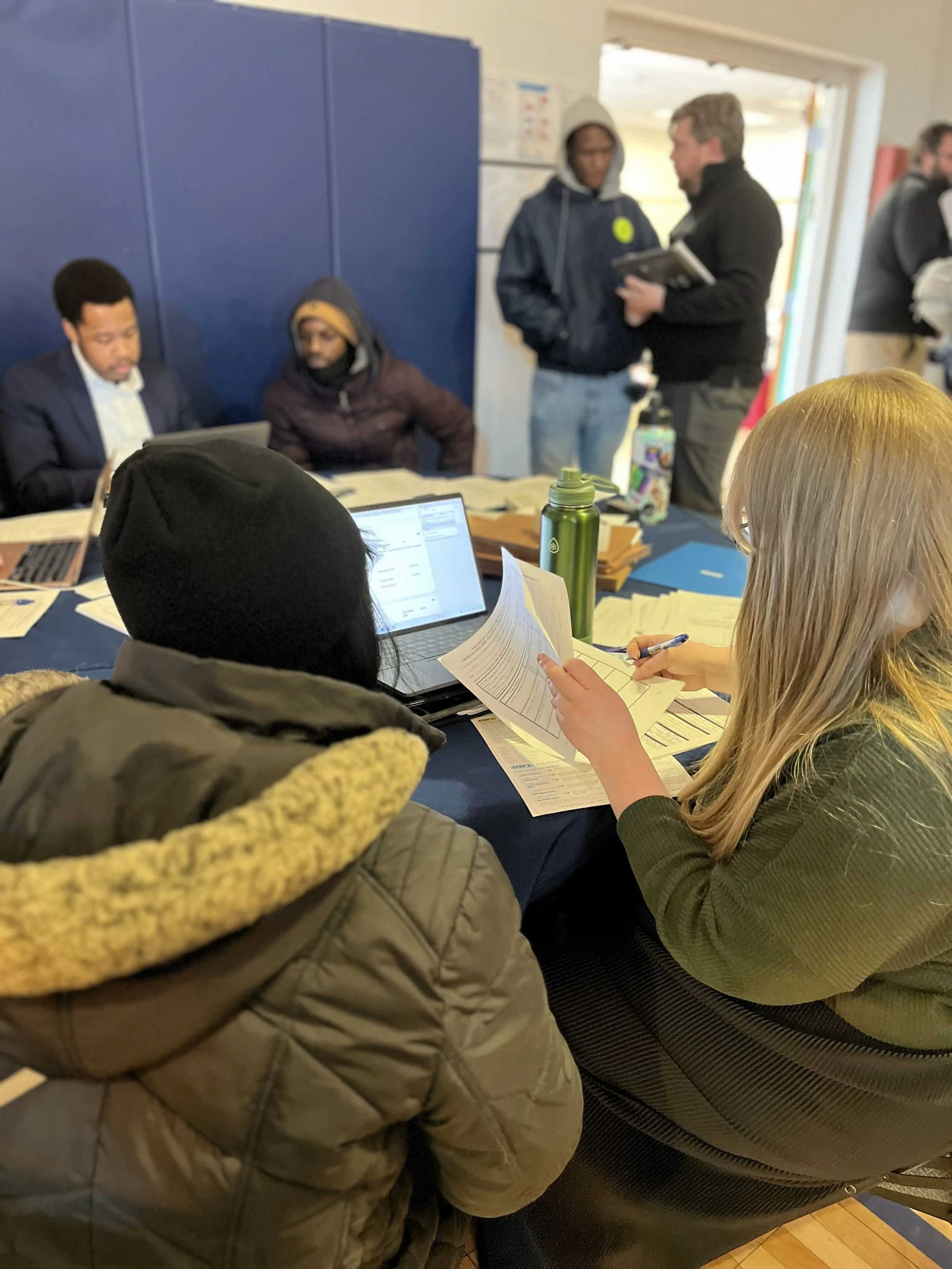
Volunteer attorneys from the Office of the Ohio Public Defender provided over 70 guests with legal consultation, and helped 40+ guests complete their expungement applications.
On February 9, Make-A-Day hosted a Move the Box Pop-Up Care Village at the Reeb Center on Columbus’ South Side, bringing together volunteer attorneys from the Office of the Ohio Public Defender, local judges, Franklin County Municipal and Common Pleas Court staff, Legal Aid attorneys, and community partners to make record relief accessible in a familiar, trusted space. The Reeb Center is a long-standing community hub designed to co-locate social services in one accessible location, serving residents of the South Side, one of Columbus’ most historically disinvested neighborhoods and a priority geography identified in our racial equity and reentry grant funding. The surrounding census tracts served by Reeb have some of the highest rates of poverty, housing instability, and justice involvement in Franklin County, aligning directly with the priority populations identified by the Ohio State Bar Foundation’s Racial Justice Initiative. Hosting Move the Box at Reeb ensured the event was located within the community most impacted by structural barriers to housing, employment, and legal access, rather than requiring residents to navigate distant or unfamiliar systems.
More than 200 residents participated in the event. Over half identified as Black or African American, reflecting the disproportionate impact of criminal records on Black communities in Columbus. Nearly one in four participants reported currently experiencing homelessness or living in a shelter. The average participant was 43 years old, placing most in their prime working years, where access to employment and housing has an outsized impact on long-term stability. These demographics confirm that Move the Box is reaching residents most impacted by structural barriers to opportunity and aligns directly with the racial equity and housing stability goals of our public and philanthropic partners.
By the end of the event, over 70 legal consults were completed and 40+ expungement applications had been filed. Fifty participants received filing fee waivers, eliminating a financial barrier that often prevents people from applying at all. Legal Aid Society of Columbus attorneys provided direct assistance, helping participants understand eligibility, complete paperwork, and submit applications onsite. Clerk of Courts staff reviewed and accepted filings in real time, eliminating the need for participants to navigate multiple offices, appointments, and transportation barriers that often prevent applications from being completed.
This level of access changes outcomes.
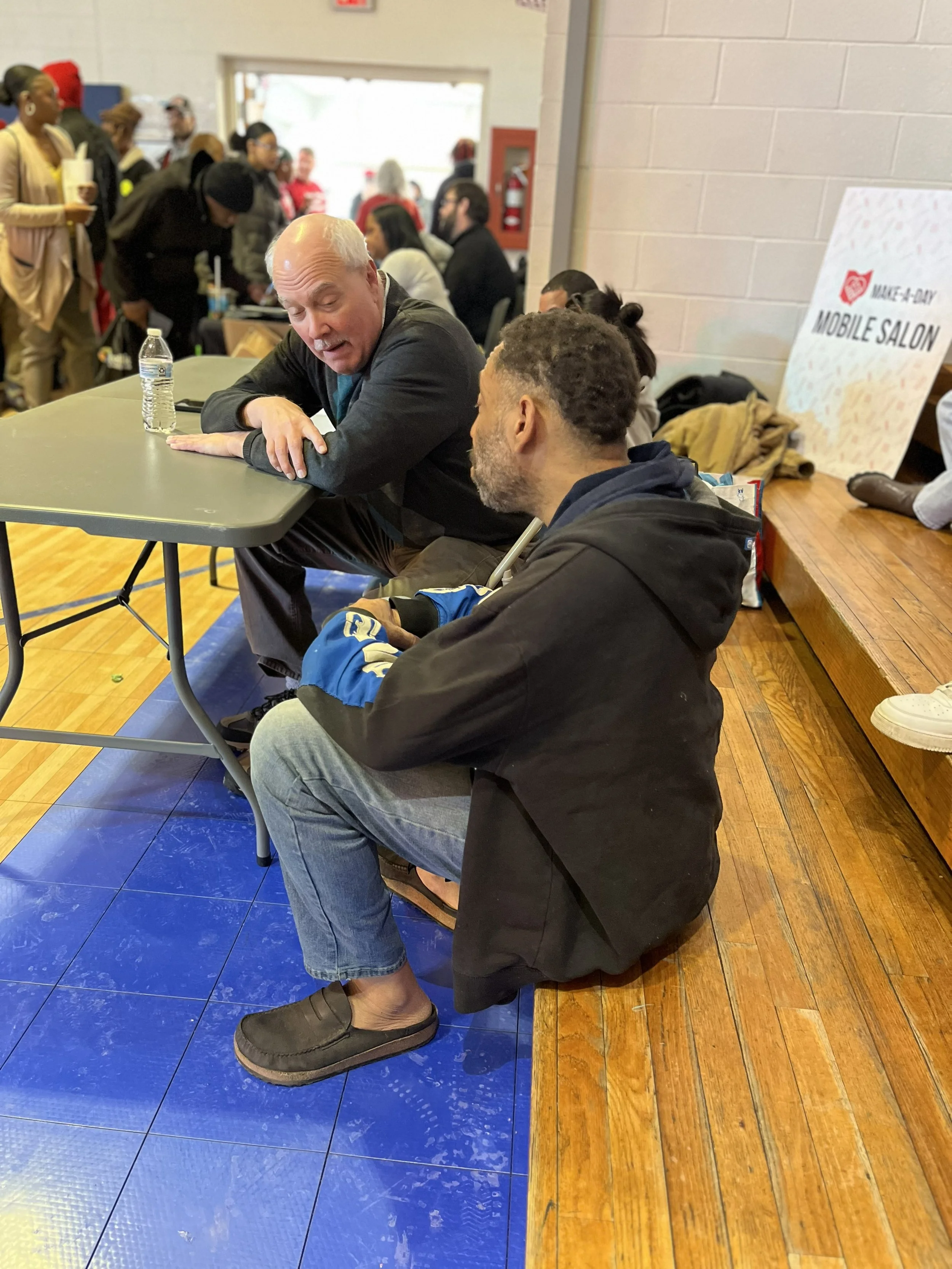
Guests were also able to receive legal consultations regarding tenant rights from our volunteer attorney.
In one instance, a participant encountered an issue that would have prevented their eligibility. Instead of requiring them to resolve it on their own and return later, court staff and the prosecutor’s office worked together onsite to address the issue, allowing the application to proceed that same day. Moments like this reflect what equitable access looks like in practice, not lowering standards, but removing barriers that prevent people from reaching them.
Attorneys from the Office of the Ohio Public Defender noted that the impact of the day extended beyond the applications themselves. They described how Make-A-Day staff and volunteers supported participants through moments of uncertainty and crisis with patience and care, creating an environment where people felt safe asking questions and navigating a process that can otherwise feel intimidating. Attorneys emphasized that many participants wanted not only legal assistance, but the opportunity to explain their situation and be heard. The ability to sit down one-on-one, review their record, and talk through their options without judgment was as meaningful as the legal outcome itself. One volunteer attorney reflected that every person she met that day was able to receive some form of help, whether through filing an application, resolving an eligibility issue, or understanding next steps. She described the experience as deeply impactful, not only because records were cleared, but because participants left with clarity, dignity, and a path forward.
The event also addressed the interconnected barriers that often accompany a criminal record.
Fifty participants received support related to driver’s license reinstatement and amnesty through the Bureau of Motor Vehicles. Twenty-five individuals met with child support staff to understand enforcement issues affecting their mobility and employment. Legal aid partners provided guidance on next steps for cases requiring additional documentation or follow-up.
At the same time, community partners delivered critical support services that strengthen stability beyond the legal process.
Participants received harm reduction services and 150+ benefits navigation supports, helping individuals access healthcare, income, and essential resources. Twenty-six phones were distributed, restoring communication with employers, housing providers, and family. Medical providers delivered care onsite. Volunteers provided haircuts, and Mid-Ohio Food Collective served 400 meals.
In total, partners provided 1,185 services during the event, supported by 20 volunteers contributing 76 hours of service.
These services are not separate from legal access. They are part of the same continuum. Stable housing, employment, and health all depend on access to identification, communication, mobility, and legal standing.
Follow-up with participants from earlier Move the Box events shows what happens when that access exists. Half of respondents reported that their records have already been successfully sealed. Others remain in the process, completing probation requirements or resolving cases across multiple jurisdictions, steps that would have been difficult to navigate without legal support. Regardless of status, participants described measurable progress toward stability. Seventy-five percent of respondents reported being employed, including one individual who is now working as a tutor and noted improved outcomes on background checks after beginning the expungement process. Participants also reported increased housing stability, including securing leases, moving into stable housing, or becoming eligible for housing programs. Others obtained identification documents at Move the Box events or through follow-up support, removing a foundational barrier to employment, housing, and services.
These outcomes demonstrate that record relief is not simply a legal intervention, but a catalyst for economic mobility, housing stability, and long-term opportunity.
This is how structural barriers begin to loosen, not through a single intervention, but through coordinated access over time.
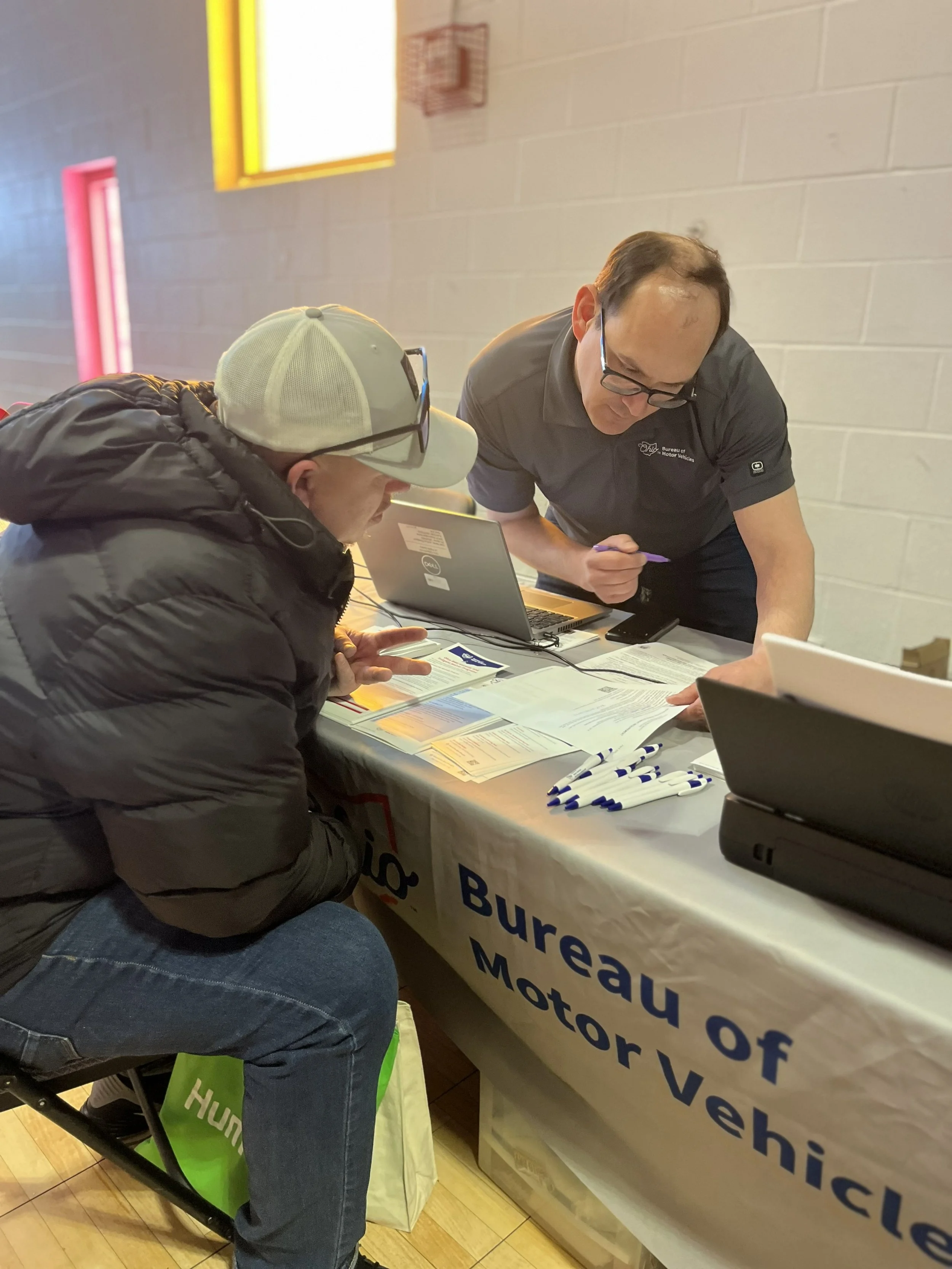
Fifty participants received support related to driver’s license reinstatement and amnesty through the Bureau of Motor Vehicles.
Move the Box reflects Make-A-Day’s broader approach: meeting people where they are, addressing immediate needs, and working alongside partners to remove systemic barriers that disproportionately affect communities of color.
Each application filed represents access to housing that was previously unavailable. Each fee waived removes a financial barrier that disproportionately impacts low-income residents. Each partnership strengthens a model that brings legal access into the community, rather than requiring residents to navigate inaccessible systems alone.
On February 9, dozens of Columbus residents moved closer to stability, not because the law changed, but because access did.
That access is what makes change possible.
Move the Box is made possible in part through the support of the Ohio State Bar Foundation and the CPPS Heritage Fund, whose investments fund the staff, legal coordination, and outreach required to bring expungement services directly into community spaces like the Reeb Center. Their support makes it possible to remove financial and structural barriers to record relief, expand access to justice, and ensure that residents most impacted by systemic inequities have a meaningful opportunity to move forward toward housing, employment, and long-term stability.